Every month, millions of women experience a wave of anxiety, irritability or unexplained rage in the days before their period — and then quietly blame themselves for it. But this isn't a willpower problem or a personality defect. It's neuroscience. To understand luteal phase anxiety, you have to understand the HPA axis.
What is the HPA axis?
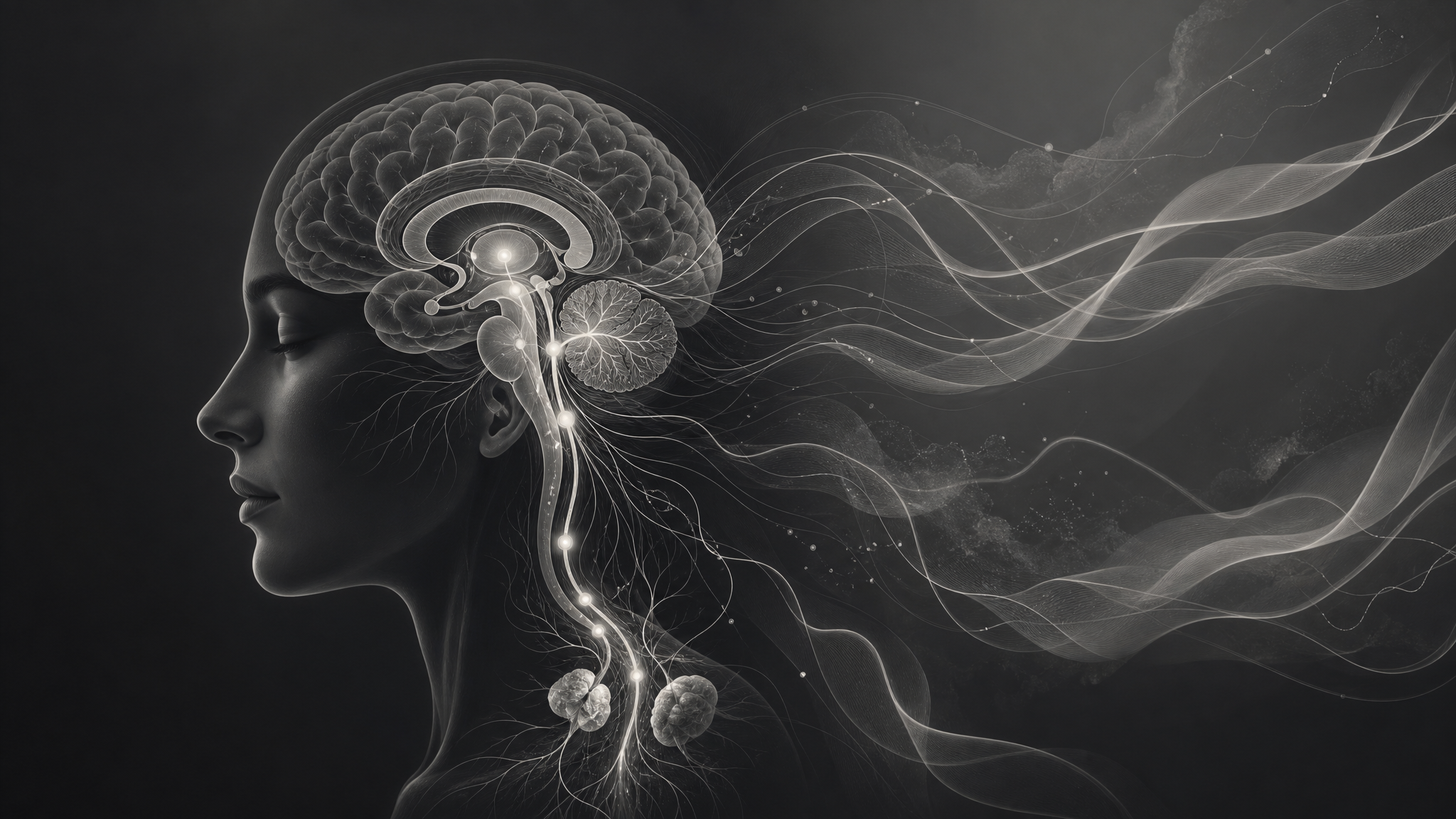
The HPA axis — the hypothalamic-pituitary-adrenal axis — is your body's central stress-response system. It's the network that decides how much cortisol (your primary stress hormone) to release, and when. In a regulated state, it responds to a threat and then settles back down. In a dysregulated state, it stays switched on — leaving you anxious, reactive and on edge.
How the luteal phase hijacks it
Here's the mechanism most women are never told:
1. Progesterone rises, then withdraws. After ovulation, progesterone climbs. Progesterone is calming — it supports GABA, the neurotransmitter that quietens the brain. Then, in the late luteal phase, progesterone withdraws sharply. That calming brake is suddenly removed.
2. Cortisol becomes harder to regulate. With less progesterone buffering the system, the HPA axis becomes more reactive. Cortisol spikes more easily and takes longer to come back down.
3. The amygdala gets louder. The brain's threat-detection centre becomes more sensitive. Ordinary stressors — a full inbox, a minor comment — register as bigger threats than they are.
Put together: a hormonally primed nervous system, a twitchy stress axis, and a hypersensitive threat detector. That's the biological recipe for "Day 21 rage" and late-cycle anxiety.
Want to know your specific luteal pattern — and which regulation tools fit it? Take the free 2-minute Surge Type Quiz.
Find Your Surge TypeWhy this matters: it's survival mode, not madness
When your HPA axis is dysregulated, your body is essentially in survival mode. Fight-or-flight. That's not a flaw in your character — it's an ancient protective system responding to a hormonal shift. Reframing it this way isn't just comforting; it points to the actual solution.
What actually helps
Because the problem is a dysregulated nervous system, the fix is nervous-system regulation — not talking yourself out of it. Evidence-informed somatic approaches include:
- Bilateral stimulation — rhythmic left-right input (used in EMDR therapy) that helps settle the amygdala.
- Somatic, body-based practices — techniques that discharge stress and signal safety through the body.
- Grounding protocols — practices that bring the HPA axis back toward baseline.
These work with your physiology instead of fighting it.
The bottom line
Luteal phase anxiety and rage are real, they're physiological, and they have a name. Your nervous system isn't betraying you — it's responding exactly as it's built to. And a nervous system can be regulated.
Discover your Surge Type in 2 minutes — and get the personalised tools that match your luteal pattern.
Take the 2-Minute Quiz